International Network of Students’ Law Clinics Expands into Central Asia
The International Network of Students’ Law Clinics, established in 2024 on the initiative of our Faculty and the University of Johannesburg (South Africa), has welcomed a new member: the Legal Clinic of Tashkent State University of Law (Uzbekistan). Established in 2000, it is one of the oldest legal clinics in Uzbekistan. The first joint meeting of students from all three universities took place on 14 October 2026.
The International Network of Students’ Law Clinics was established in July 2024 under an agreement concluded in Gdańsk between representatives of the legal clinics of the University of Gdańsk and the University of Johannesburg. Its purpose is to foster international cooperation in clinical legal education, facilitate the exchange of experience and promote the joint examination of real-life legal issues. From the outset, the Network was envisaged as an expanding initiative, bringing together partners from an increasing number of countries and continents.
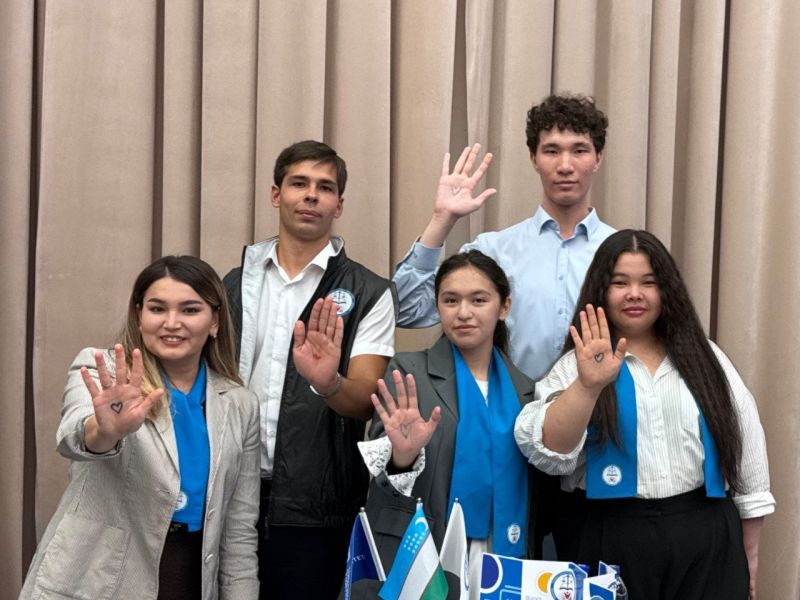
The Network’s newest member is the Legal Clinic of Tashkent State University of Law (TSUL), one of the pioneering institutions of its kind in Uzbekistan. Founded in 2000 as part of the Tashkent State Institute of Law, which was granted university status in 2013, the Clinic has developed an extensive range of free legal advisory services and public legal education activities over more than a quarter of a century.
The scale of its operations is particularly noteworthy. In 2024 alone, the Clinic handled more than 3,000 requests for assistance. Student interest in its activities is equally impressive. In 2025, approximately 800 students applied to join the Clinic, of whom 137 were selected as volunteers.
The Tashkent Legal Clinic’s work extends well beyond the provision of legal advice. Among its initiatives is the Street Law programme, designed to promote legal literacy and public understanding of the law. The Clinic also organises educational events and consultations for local communities, provides online legal advice and produces practical legal information materials. Furthermore, it cooperates with international organisations and institutions working to improve access to justice, including the United Nations Development Programme (UNDP), the United Nations Office on Drugs and Crime (UNODC) and Street Law, Inc.
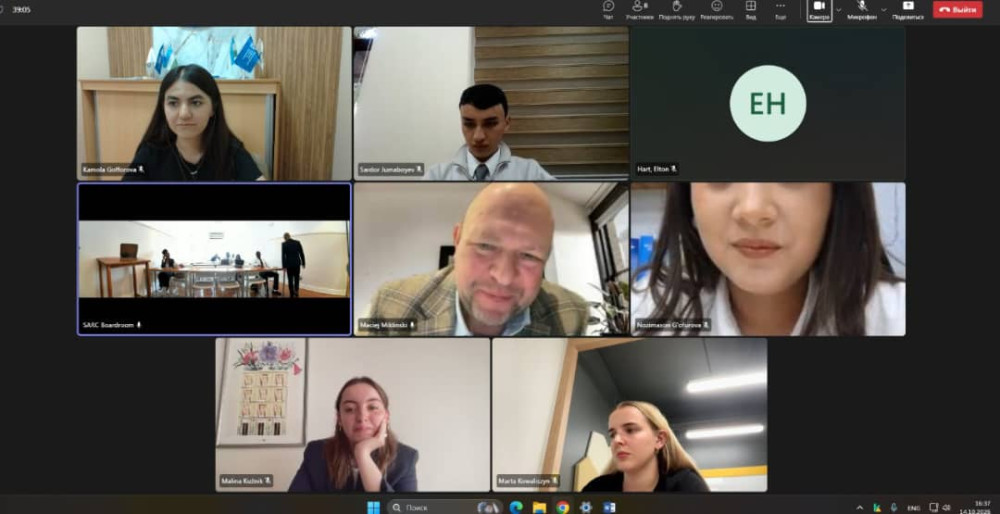
The first meeting of the Network in its newly expanded form was held online on 14 October 2026, bringing together students from Gdańsk, Johannesburg and Tashkent.
The Uzbek hosts presented two case studies drawn from actual matters handled by their Legal Clinic: one concerning civil law and the other criminal law. They outlined the circumstances of each case, explained the legal reasoning adopted and discussed the solutions reached in practice.
Students from Poland and South Africa asked questions to clarify the facts and subsequently explored how similar cases might be resolved under their respective legal systems. The discussion provided an opportunity to compare legal approaches across three jurisdictions shaped by different legal traditions. Particularly illuminating were both the differences in legal doctrines and frameworks and the similarities in the practical approaches adopted to address the problems faced by legal clinic clients.
The meeting demonstrated the value of international cooperation in clinical legal education, an approach that combines the acquisition of legal knowledge with its practical application to real-life cases. It also offered participants an opportunity to develop their legal reasoning and advocacy skills, strengthen their ability to communicate in English and engage in comparative legal analysis.
Representatives of all three legal clinics expressed their interest in continuing these joint meetings and further strengthening cooperation within the International Network of Students’ Law Clinics.
We warmly welcome our new partners from Tashkent and extend our sincere thanks to all participants for their commitment, stimulating contributions and openness to sharing knowledge and experience.